
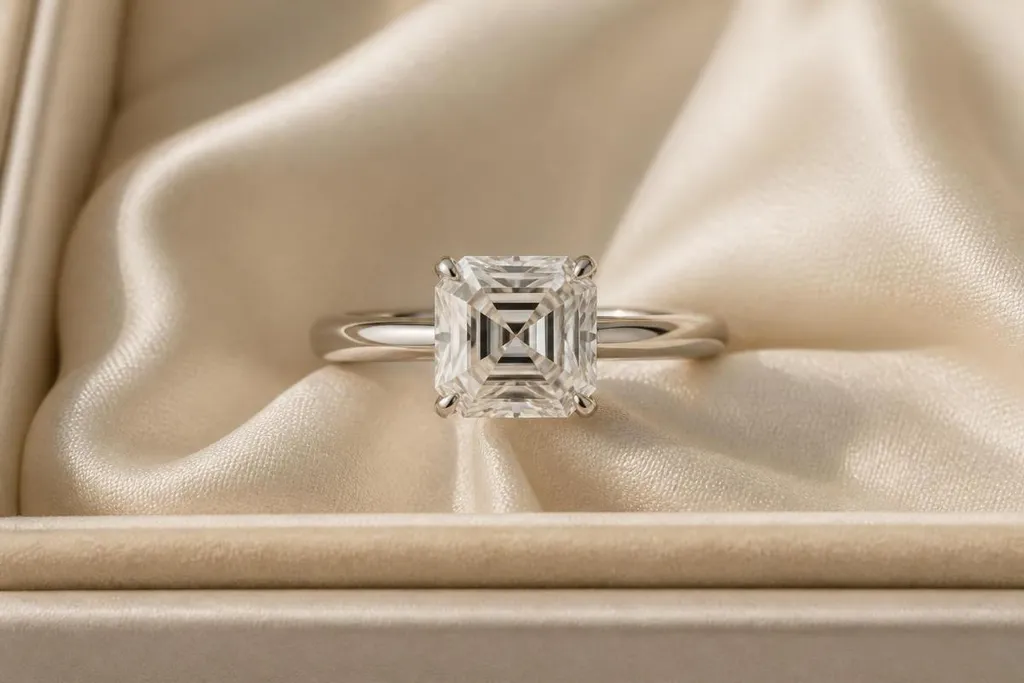
The most memorable jewellery usually has a clear point of view. Here, that distinction comes from decisions that can be appreciated immediately yet become more interesting with closer attention. At its best, the design uses a square step-cut structure, clipped corners and concentric facets to create remarkable visual depth. That clear purpose offers more than a passing trend: it creates an aesthetic that can be adapted to personal taste without losing its essential character. The intended impression is balanced, with a result that remains adaptable.
A useful reference is discover the lab diamond asscher cut collection. This gives the eye a consistent reference point for deciding which proportions feel elegant, which details feel useful and where personal preference should lead. The aim is not to identify one universally superior option, but to recognise the most coherent combination for the intended wearer. The intended impression is balanced, with a result that remains adaptable.
Understanding the Shape's Visual Character
What gives the design authority is the relationship between outline and detail. The pattern feels distinctly Art Deco, favouring symmetry and controlled flashes over the lively sparkle of a brilliant cut. The eye should understand the principal feature before moving naturally towards finer craftsmanship. That discipline keeps the composition balanced rather than overstated, while supporting a piece that remains adaptable.
A second layer comes from the supporting materials and geometry. Balance cut, face-up dimensions, colour and clarity rather than pursuing a single headline grade; the most satisfying combination depends on the design. Gallery height, shoulder transition and the amount of visible metal decide whether the ring appears light, architectural or richly detailed from the side. This is why two pieces built around the same headline idea can produce very different moods: one may feel crisp and restrained, another warmer or more decorative, without either losing the design's identity. From every angle, the workmanship should look balanced and feel adaptable.
Balancing Cut, Proportion, and Setting
Good comparison depends on looking at relationships rather than isolated details. A well-centred facet pattern, pleasing square outline and good clarity matter greatly because the design invites the eye into the stone. Photographs from above, profile views and measurements are more informative when considered together. Such comparison encourages a balanced decision with a adaptable basis.
A well-resolved setting creates visual calm. Four corner prongs can reinforce the octagonal outline, while a geometric halo gives the cut an even stronger period-inspired frame. Even spacing, smooth finishing and a sensible distribution of weight help the piece feel intentional in the hand. The finished construction should appear balanced and prove adaptable.
Metal, Comfort, and Everyday Wear
Everyday suitability depends on routine. Setting height, exposed edges and the way the band meets neighbouring fingers all influence whether the ring feels natural during ordinary movement. For regular wear, remove the ring during heavy manual work, store it separately and arrange professional checks if a claw catches or the setting begins to feel different. Those habits help a balanced piece remain adaptable.
The design's relationship with other jewellery can reinforce its character. Trying the design beside a wedding band is worthwhile even before the band is chosen, as gallery shape and setting height influence how naturally another ring will sit. Similarity creates a calm, coordinated result, whereas deliberate contrast can make the principal piece feel even more distinctive. The wider collection can then feel balanced, while this piece remains adaptable.
Final Thought
There is no single correct specification. What matters is that the principal idea remains clear, the supporting details feel proportionate and the construction suits the wearer's routine. A piece chosen on those terms does more than look impressive at the moment of purchase; it becomes easy to live with, easy to recognise as one's own and increasingly valuable in sentiment. Patient comparison is part of choosing well, not a delay. A short pause now can prevent a visually impressive but unsuitable choice. That is the difference between a merely attractive option and one that feels both balanced and adaptable.